Cook It
A gamified cooking app with 0 out of 6 users completing the core flow. Here's how I fixed it.
Client
Cook It (Freelance)
Project Timeline
2020
Industry
Food & Beverage, Social Media
Scope of work
User Research
UX/UI Design
Visual System


Cook It had a genuinely interesting idea: a social platform where users don't just share recipes — they recreate their cooking process inside a gamified virtual kitchen, building a live, shareable record of how they cook.
The founder had already launched a version. But the interface wasn't communicating the concept — a novel mechanic without a clear entry point was creating confusion. Users couldn't find their footing.
0 out of 6 users successfully created a recipe.
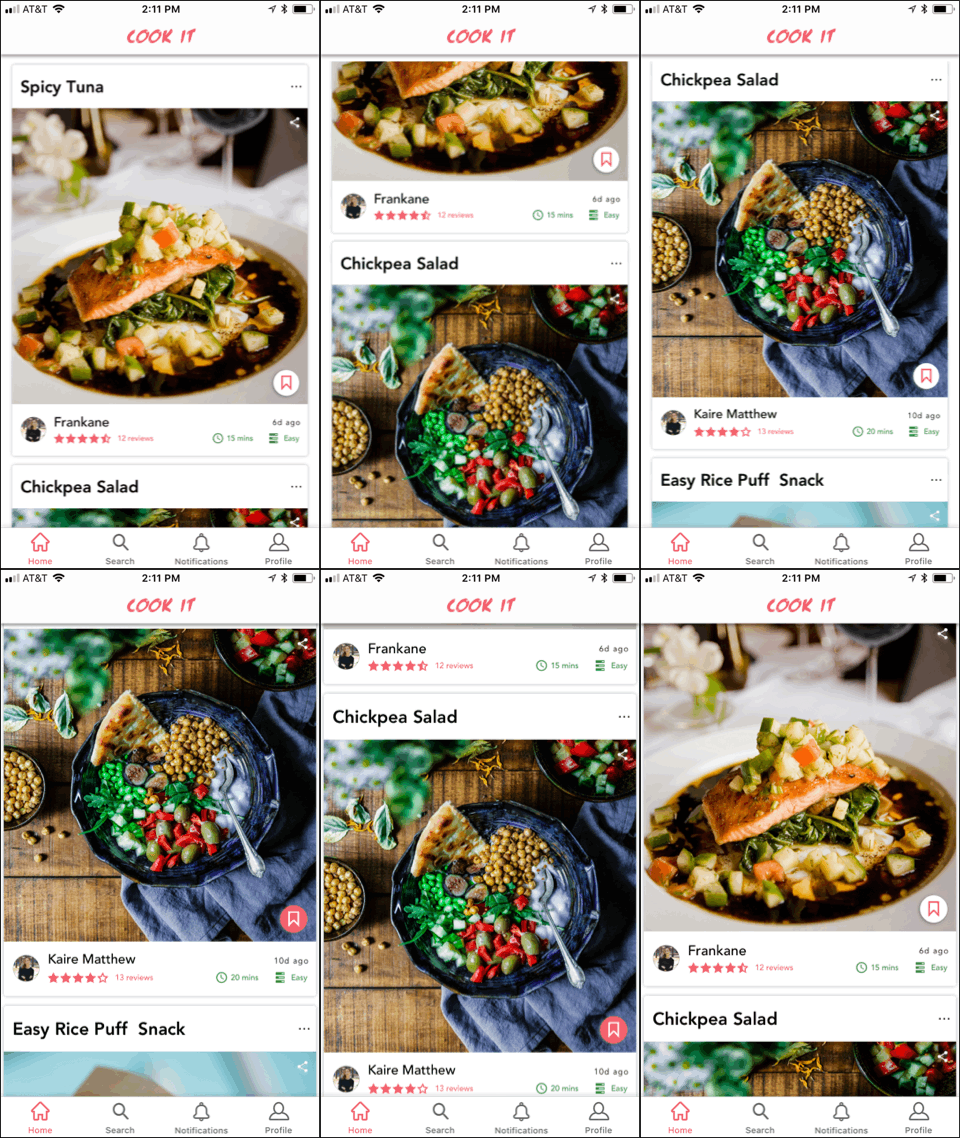
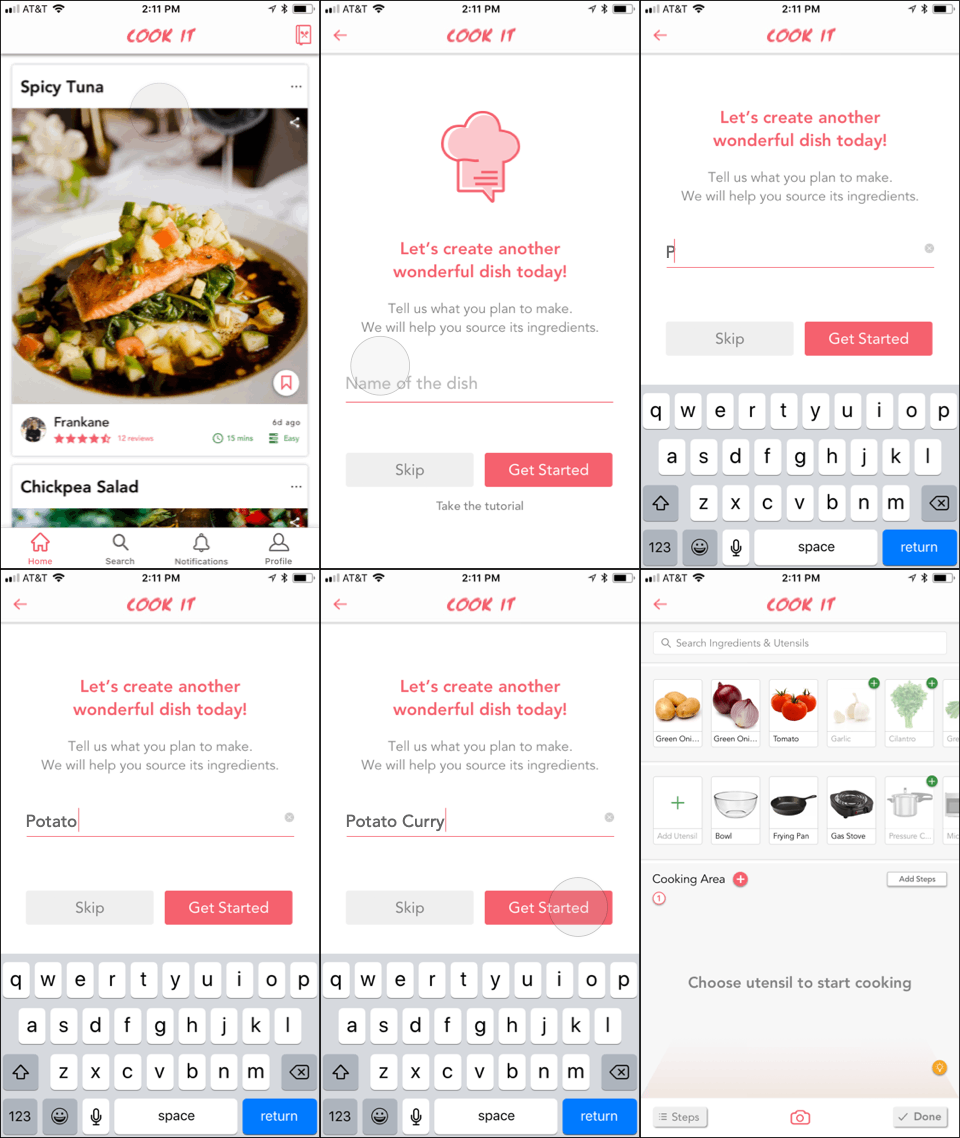
Rather than rebuilding the product, I focused on the execution. I built a visual system from scratch, redesigned the home feed to earn the tap, and added structured onboarding to teach a novel interaction mechanic.




Who I designed for
Two distinct user types. Very different relationships to food and cooking.
The Design Tension
Complexity that serves the Performer will lose the Scroll-and-Save. Simplicity that serves the Scroll-and-Save will limit the Performer. Every decision is a negotiation between these two.
What was broken
Competitor Analysis
Competitive analysis was scoped by interaction mechanic rather than category:
Asset-based creation flows — Cooking Mama
In hindsight, the competitive set would have benefited from including Toca Kitchen 2 alongside Cooking Mama — since its no-fail sandbox model matched more closely with the virtual kitchen's goal of free-form creation rather than skill-based scoring.
User Research
The founder handed over three rounds of prior research — but the personas were never validated. I didn't take it at face value. I reset to generative research and rebuilt from the ground up.

Round 1 tested the original app with 6 users — not to confirm it was broken, but to find where the concept wasn't landing.

Affinity Mapping
The affinity map clustered 20 findings into five problem areas. The pattern was clear: the core concept was sound — the execution wasn't.
Two areas needed urgent attention: the home feed and the create recipe flow.

What I Fixed
01 — Home Feed: Making Cards Worth Tapping
Users didn't ignore recipe cards — they never realized the cards were interactive. Even the ones who tapped were trying to like the photo, not open the recipe.

The card had to stop reading like a social post and start reading like a doorway. The redesign leads with the signals users needed to decide — rating, cook time, difficulty — and restructures hierarchy so the recipe name reads as the action, not a caption.

02 — Create Recipe Flow: Teaching the Mechanic Without a Manual
The virtual kitchen was the hardest problem in the product — a novel drag-and-drop mechanic with no mental model to lean on.
Round 1 was blunt: 0 of 6 created a recipe.
Three findings reshaped the design:
FINDING 01
Blank Canvas overwhelmed everyone
Sourcing everything from scratch overwhelmed users — 3/6 wanted to quit mid-test.
FINDING 02
Steps were unreadable
Ungrouped cooking areas forced users to read through everything to follow a recipe.
WHERE I PULLED BACK
My first direction didn't survive engineering
I'd designed a realistic kitchen — true-to-life appliances, photorealistic assets, and a more immersive cooking space.
But it wasn't buildable.
That constraint ended up improving the product.
Pulling back sharpened the work
Less focus on experience, more focus on interaction and steps.
A Guided Entry Point


The redesigned flow in action
Looking Back
Revisiting this with more experience, a few things stand out.
I inherited and rebuilt the research, but I'd validated personas through usability testing, not contextual immersion. With more time, I'd have done in-context observation — watching people actually cook — before locking the personas.
The tutorial was necessary, but it was also a signal. When users need a tutorial to understand the core mechanic, the mechanic itself needs scrutiny. I'd have run a dedicated round of testing on the virtual kitchen concept alone — not to kill it, but to find where the mental model breaks.
The biggest unresolved tension was the Scroll-&-Save / Performer gap. The creation flow was complex by necessity for the Performer — but the Scroll-&-Save had to navigate that same complexity just to engage. I'd have designed two distinct entry paths rather than forcing both through one flow.